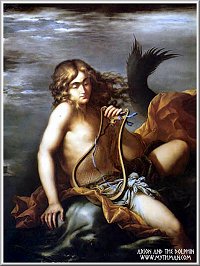
Arion & the Dolphin
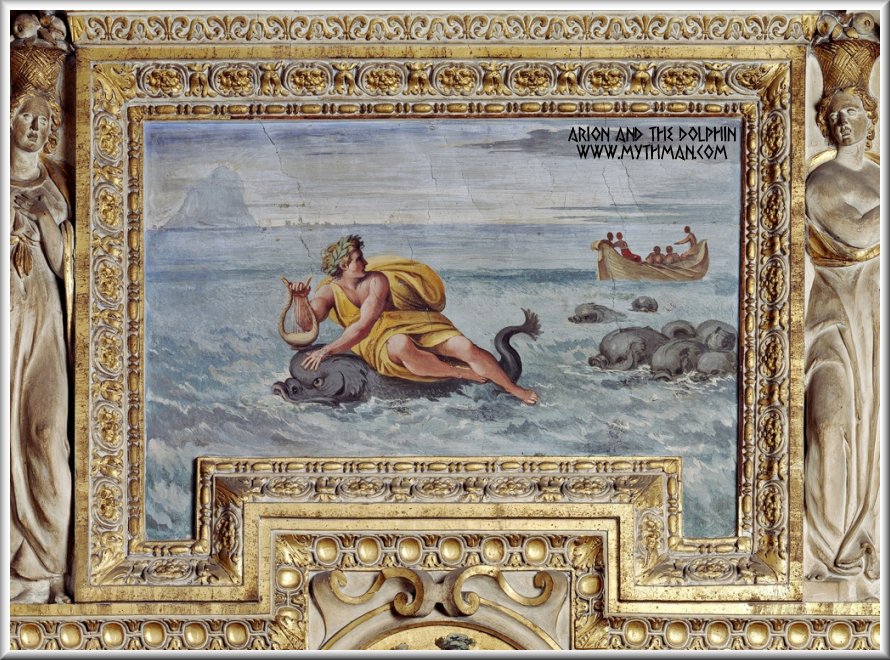
by Salvator Rosa
CLICK TO ENLARGE
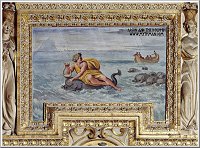
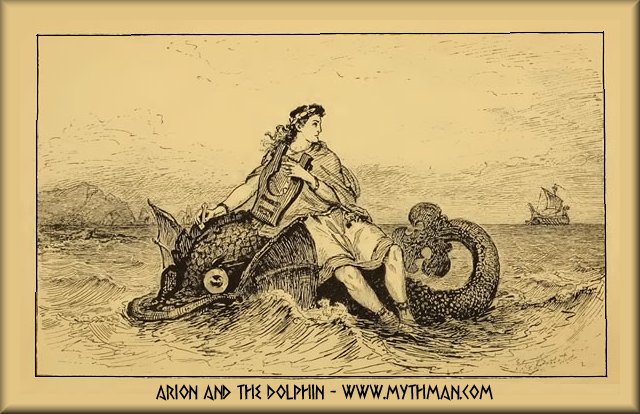
Arion and the Dolphin
CLICK TO ENLARGE
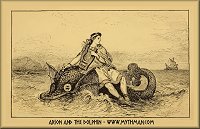
Arion and the Dolphin
CLICK TO
ENLARGE
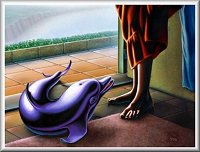
Arion and the Dolphin
CLICK TO ENLARGE
|
ARION AND THE DOLPHIN BY MYTH MAN
Arion of Methymna in Lesbos was a celebrated lyric poet and
player on the cithara, and the inventor of dithyrambic poetry.
He was the first to compose and name the dithyramb (originally a
choral song to Dionysus, god of wine) which he afterwards taught
at the city of Corinth.
The poet Arion lived about B.C. 625, and spent a great part of
his time in the court of King Periander of Corinth, but one day
he received news that there was to be a musical contest in the
island of Sicily, in Italy. The greatest poets, singers and
musicians of the land would take part in this rich and
prestigious competition.
Arion's musical talents were by then widely renown in his
homeland, and he knew that he stood a very good chance of
winning the contest. He decided to sail to Italy and Sicily in
order to make a lot of money and also to further spread his fame
to another land.
Indeed Arion excelled in the musical contest, enchanting the
judges and the listeners, and he won the first place prize.
Carrying his rich prizes and laden with presents from the
adoring Sicilians, Arion then hired a Corinthian vessel to carry
him back home to Corinth.
But when they were out at sea, the evil and greedy crew began to
covet the poet's new treasure and they rudely plotted to take
Arion's money and to cast him overboard, where he would soon
drown. So they seized the helpless poet and announced their
intentions.
In face of this distressing situation Arion asked for his life
and offered them his money, but the crew would not listen to
him, and told him either to kill himself and so receive burial
on land or else to jump into the sea at once.
You could say that poor Arion was "caught between Scylla and
Charybdis" (that expression means between a rock and a hard
place...)
Arion didn't want to commit suicide, and certainly he didn't
wish to drown. He thought quickly and then he proposed a final
request to the pirate crew. He asked if he could be permitted to
sing a song on the deck, accompanied by his cithara.
The crew eagerly allowed this, pleased at the thought of hearing
the best singer in the world. Arion began to strum his cithara
and the sweetest sounds filled the air. The dastardly crew, scum
though they were, nevertheless couldn't help but to be
transfixed by the heavenly sound of the lyre and Arion's
unsurpassed voice.
But when the sound of the lyre and his voice were heard, many
song-loving dolphins came all about the ship, and they frolicked
along with it, rejoicing at the music. That was Arion's cue. At
the sight of the friendly dolphins Arion once more invoked the
gods in inspired strains and threw himself into the sea.
The crew thought that he had perished so they sailed back to
Corinth, certain that the poet had drowned and gleefully
thinking of ways to spend their new-found loot.

But in the meantime one of the song-loving dolphins took Arion
on his back and bore him from the Sicilian Sea to Taenarum. From
there he found another ship and hired it to return him to
Corinth.
Soon Arion arrived back home but King Periander, being of a
skeptical nature, didn't believe the fantastic story of the
savior dolphin and so he kept Arion under house arrest, while he
waited for the sailors to return.
When their ship arrived the king immediately summoned the
rascals to the palace and they were asked about Arion. They had
conspired to stick to the same story, so the pirates replied
that he was safe and that they had left him very prosperous at
Tarentum.
The crew told King Periander that Arion had enjoyed himself so
much at Tarentum, what with winning the musical contest and all,
and the people there had so fallen for his charms and talents,
that he had decide to take up residence there.
That's when Arion appeared before them, and the treacherous
sailors could no longer deny what was proved against them.
A small variation of the story claims that Arion reached land in
Corinth carried by the hero dolphin, but that he forgot to push
the dolphin back into the sea and it perished there. King
Periander ordered it to be buried, and a monument to be raised
to honor the friendly dolphin.
As for the pirate ship, it is claimed that it was brought back
to Corinth by a storm sent by Poseidon, and when the sailors
were asked about Arion, they replied that he had died suddenly
and that they had buried him with all the honor befitting such a
renowned bard. When the king heard this he said:
"Tomorrow you will swear to that at the Dolphin's Monument."
(Periander to the sailors. Hyginus, Fabulae 194)
The King had his trap set. He ordered his soldiers to keep the
crew under guard and instructed Arion to hide in the monument of
the dolphin wearing the same clothes he had when he threw
himself into the sea.
The next day when the sailors came to swear by the dolphin's
spirit that Arion was dead, the artist came out of the monument,
horrifying the crew, who thought that they were seeing a ghost.
The traitorous sailors had no choice but to admit their guilt,
whereupon they were then crucified.
To honor Arion, Apollo, the patron god of music, placed him and
the dolphin among the stars (constellation Delphinus), where
they are to this day.
(Yet others say that Delphinus was placed in the sky by the
god of the sea Poseidon, in thanks for the dolphin's efforts in
helping him get Amphitrite to agree to be his wife. As always,
different mythographers offer various versions of myths...)
|